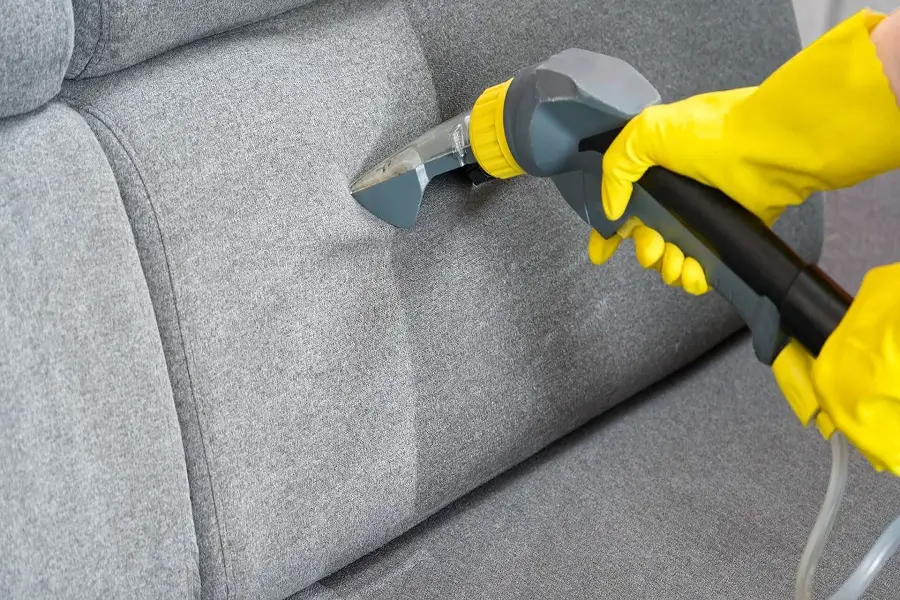
A sofa accident feels like a small disaster. One moment your living room smells fine, and the next there is a wet patch on your favourite cushion. Whether it came from a puppy, a cat, a toddler, or an adult with bladder trouble, the smell can hang around for weeks if you treat it the wrong way. At Sofa Upholstery, we clean and repair hundreds of couches every year, and urine is the problem we get called about most. This Sofa Upholstery guide shows you exactly how to get pee smell out of sofa cushions, covers, foam, and even leather, using simple steps that work at home.
How to Get Urine Smell Out of a Couch
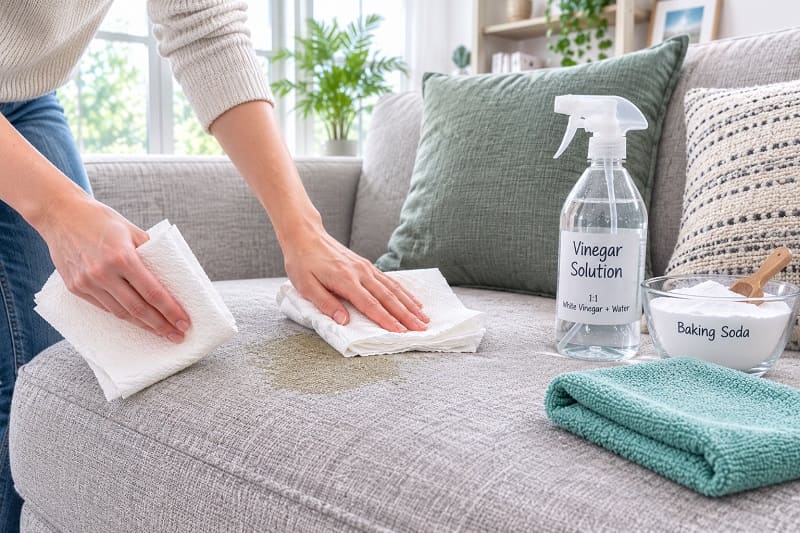
Blot the wet spot with paper towels. Do not rub. Spray a mix of one part white vinegar to two parts cool water. Blot again. Rinse lightly with plain cool water and blot until barely damp. Cover the spot with baking soda for at least 8 hours, then vacuum. If any smell is left, or if it is cat urine or a dried stain, soak the area with an enzyme cleaner, let it sit for 15 minutes, and let it air dry for 24 to 48 hours. Never use heat, steam, bleach, or ammonia.
Why Urine Smell Sticks to a Sofa
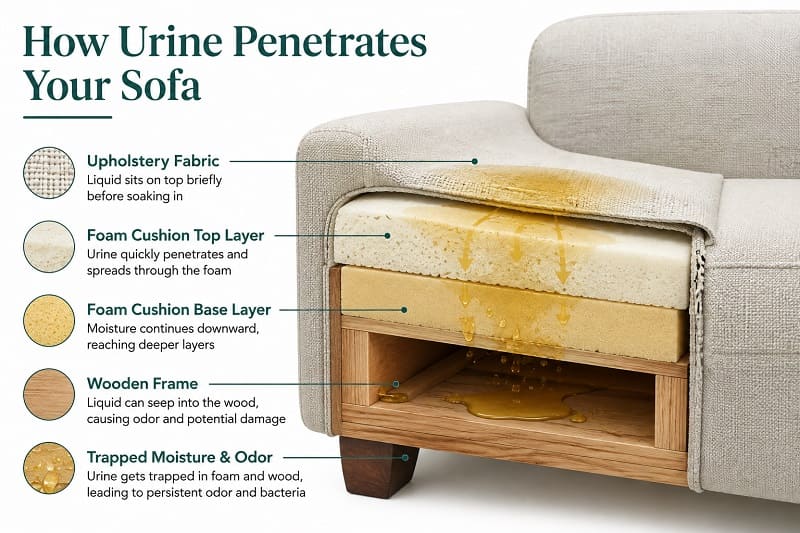
Here is the part most people get wrong. Urine is not just water and salt. It carries uric acid, which dries into tiny crystals that grip fabric fibers like glue. Water alone will not dissolve them.
So you wipe the spot, it looks clean, and you think the job is done. Then a humid day arrives, or someone sits down and warms the cushion, and the smell comes right back. Those crystals were never removed. They were just sleeping.
Three other things make sofa urine harder than carpet urine:
- The foam holds liquid. A cushion can soak up far more than the surface shows. Urine often spreads sideways inside the foam, so the smelly area is wider than the visible mark.
- Air cannot reach the middle. A cushion dries from the outside in, so the center stays damp for days. Damp foam plus warm rooms can grow mould and bacteria.
- Gravity keeps working. Liquid runs down through the cushion, past the deck fabric, and onto the wooden frame, the webbing, and sometimes the floor underneath.
Cat urine is the worst of all. Cats make a compound called felinine, which breaks down slowly into sulphur smells. That is why cat pee has that sharp, eye watering punch and why it keeps coming back long after dog urine has faded.
Step Zero: Check Your Sofa Cleaning Code
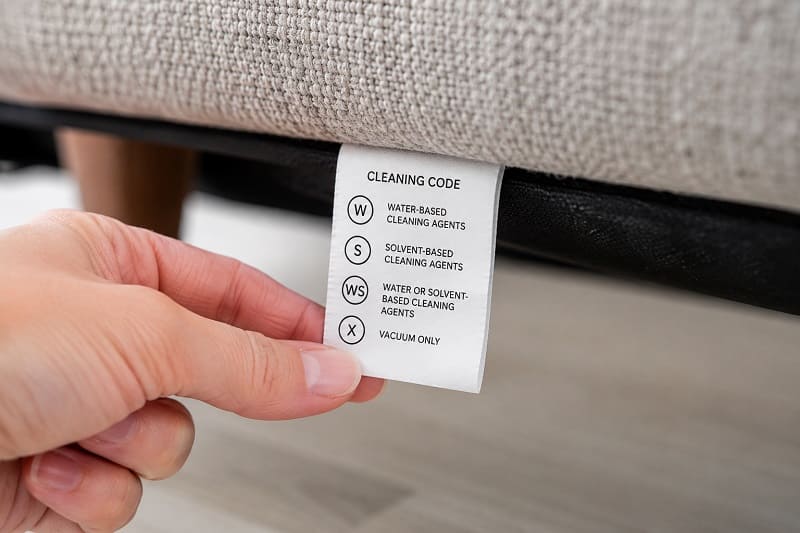
Before you spray anything, look under the cushions or under the sofa for a small tag. That tag decides everything.
| Code | What it means | Safe to use |
| W | Water based cleaning is fine | Vinegar solution, enzyme cleaner, water |
| S | Solvent only, no water | Dry solvent cleaner, salt, baking soda only |
| WS | Water or solvent both work | Most methods, but patch test first |
| X | Vacuum only | Nothing wet. Call a professional |
If there is no tag, test any solution on a hidden spot first, such as the back corner or the underside of a cushion. Dab it on, wait 15 minutes, and check for color bleeding or a water ring.
What You Will Need
Gather these before you start so you are not running around mid clean.
- Paper towels or old white towels
- Rubber gloves
- A spray bottle
- White vinegar
- Baking soda
- Mild dish soap
- A quality enzyme cleaner made for pet or urine odour
- A vacuum with an upholstery tool
- A fan
- Optional: a small blacklight torch and a wet dry vacuum
White towels matter here. Colored towels can transfer dye onto damp fabric.
Method 1: How to Clean Pee Off Couch (Fresh Accident)
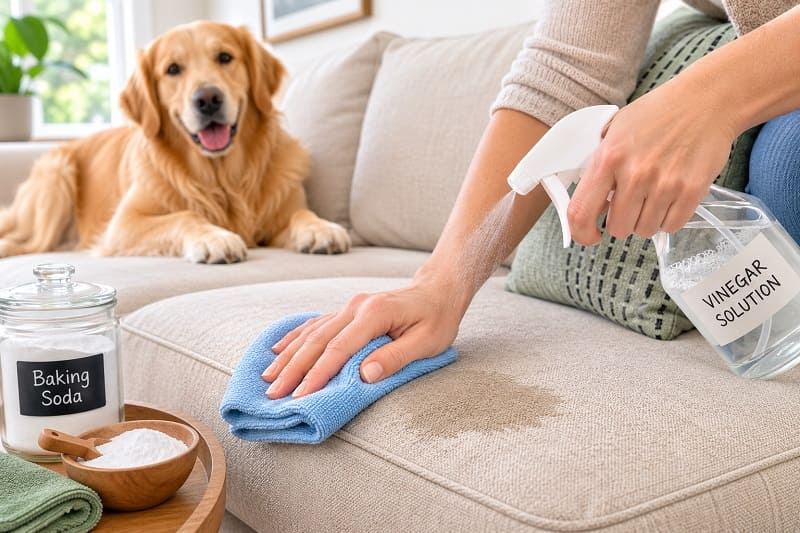
Speed is your biggest advantage. Fresh urine has not crystallized yet, so you can pull most of it out before it sets.
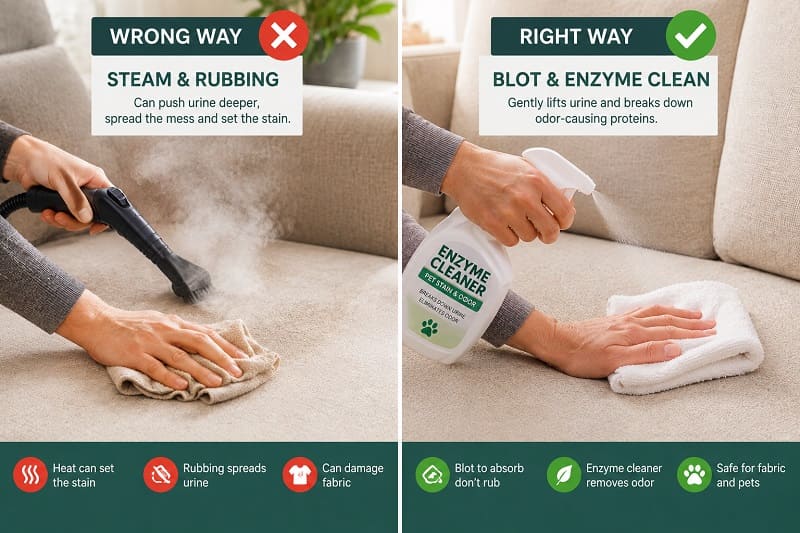
Step 1. Soak up the liquid. Press paper towels straight down onto the wet area. Stand on them if you need extra pressure. Swap for dry towels and repeat until they come up almost dry. Do not scrub, because rubbing pushes urine deeper into the padding.
Step 2. Take the cushion off. If the cushion lifts out, remove it and check the deck underneath and the sofa frame. Blot anything wet down there too.
Step 3. Spray the vinegar solution. Mix one part white vinegar with two parts cool water in a spray bottle. Add one drop of dish soap. Mist the area until it is damp, not soaked. Let it sit for 5 minutes. Vinegar neutralizes the ammonia smell and kills some odour causing bacteria.
Step 4. Blot again. Press with clean dry towels until the fabric is barely damp.
Step 5. Rinse lightly. Mist plain cool water over the spot and blot once more. This lifts out soap and vinegar residue, which is important if you plan to use an enzyme cleaner later.
Step 6. Cover with baking soda. Sprinkle a thick layer over the whole damp area. Not a light dusting. You want it to look like snow. Leave it for 8 to 12 hours, ideally overnight.
Step 7. Vacuum thoroughly. Use the upholstery attachment and go over the spot several times from different directions.
Step 8. Dry with airflow. Point a fan at the cushion and open a window. Stand cushions on their edge so air moves around all sides. Give it 24 hours before putting the sofa back together.
Method 2: How to Get Urine Smell Out of Couch After It Has Dried
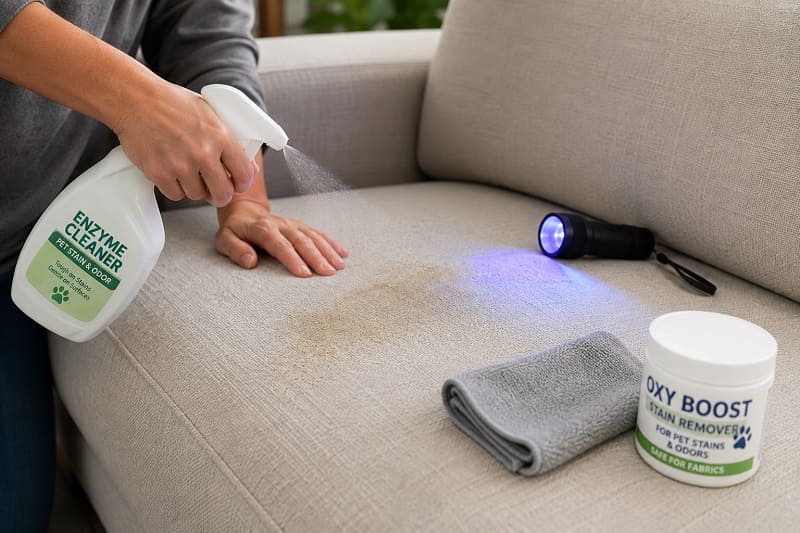
Old stains are a different job. The crystals have already formed, so you need to rewet them before anything can break them down. Skipping that step is why most people fail with dried urine.
Step 1. Find the exact area. Turn off the lights and run a blacklight torch over the sofa. Dried urine glows a dull yellow or green. Mark the edges of the glowing patch with masking tape so you know how far it spreads. You will often be surprised how big it is.
Step 2. Rewet the spot with cool water. Mist it until the fabric is damp all the way through the stain area. This wakes the crystals up so the cleaner can reach them.
Step 3. Apply an enzyme cleaner generously. This is the key move. Enzyme cleaners contain natural bacteria and enzymes that eat uric acid and break it into odourless gas and water. Vinegar and baking soda cover the smell. Enzymes remove the cause.
Do not just mist the surface. Pour or spray enough that the cleaner soaks as deep as the urine went. If the urine reaches the foam, the enzyme has to reach the foam as well.
Step 4. Let it dwell. Leave it wet for 15 minutes at minimum. Some brands ask for longer. Cover the area with a damp towel or plastic wrap to stop it drying out too fast, because enzymes only work while wet.
Step 5. Blot the excess. Press with dry towels. A wet dry vacuum works even better if you have one.
Step 6. Air dries slowly. Give it 24 to 48 hours with a fan running. Do not use a hair dryer or a heater. Slow drying gives the enzymes more working time.
Step 7. Repeat if needed. Deep or repeat accidents often need two or three rounds. This is normal, not a sign the method failed.
How to Get Rid of Cat Pee on Couch
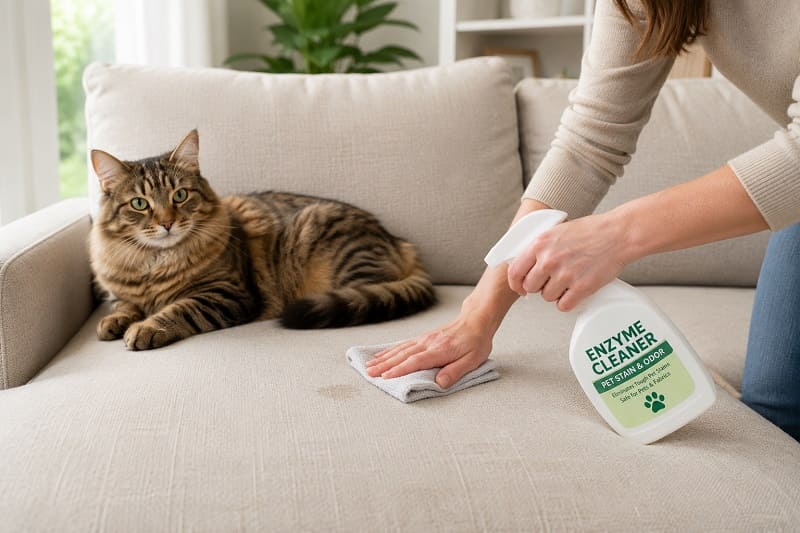
Cat urine needs its own plan because of that sulphur chemistry.
Follow Method 2 above, but with three changes:
- Skip the vinegar or rinse it out fully first. Leftover vinegar can weaken enzyme cleaners. If you already used vinegar, rinse with cool water and blot before applying the enzyme.
- Use double the enzyme cleaner you think you need. Cat urine is concentrated and travels far into foam.
- Expect a temporary smell spike. When you rewet cat urine, the smell gets stronger for a few hours before it clears. That is the crystals dissolving. Keep going.
Also ask why it happened. Cats usually avoid soft furniture. A cat that suddenly pees on the sofa may have a urinary infection, bladder stones, or stress from a new pet, a new baby, or a dirty litter box. A vet check is worth it, because no cleaning method beats a cat that keeps returning to the same spot.
How to Get Cat Pee Smell Out of Leather Sofa
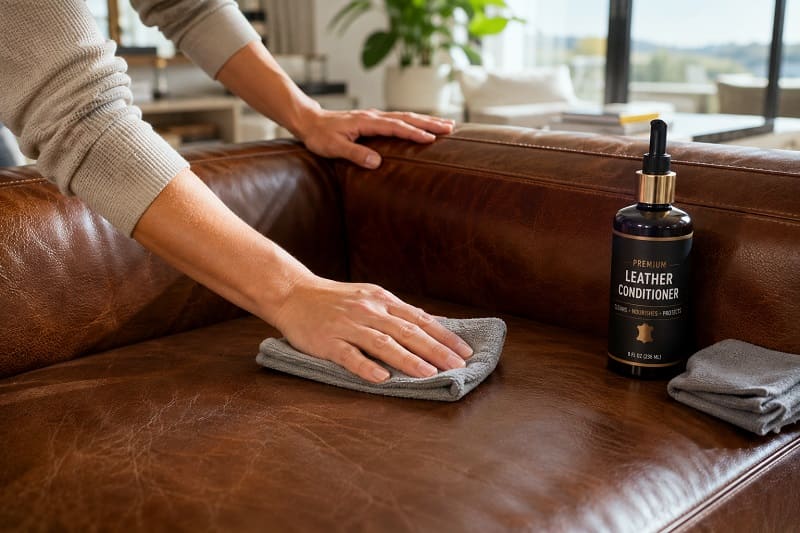
Leather is easier in one way and harder in another. Liquid does not soak into finished leather quickly, so if you catch it fast you may be done in ten minutes. But once urine seeps through a seam, a crack, or a worn patch, it reaches the foam and backing underneath where you cannot reach it.
Here is the safe method:
- Blot the surface right away with a soft dry cloth.
- Wipe with a cloth dampened in a mix of equal parts cool water and white vinegar. Wring the cloth out well. Leather should never be wet, only damp.
- Wipe again with a cloth dampened in plain water to remove vinegar residue.
- Dry with a soft towel straight away.
- If a smell remains, use an enzyme cleaner labelled safe for leather. Spray it onto a cloth, not directly onto the sofa, and wipe the area.
- Once fully dry, apply a leather conditioner. Cleaning strips natural oils, and untreated leather cracks.
Never use baking soda paste, hydrogen peroxide, bleach, saddle soap, or alcohol wipes on leather. They dry it out, lift the dye, and leave permanent pale patches.
For unfinished, aniline, or suede leather, do not attempt any wet cleaning. Book a specialist.
How to Get Dog Pee Smell Out of Sofa
Dog urine is less concentrated than cat urine, so your odds are better. Method 1 works for fresh accidents and Method 2 works for dried ones. A few dog specific notes:
- Large dogs mean large volumes. Check the floor under the sofa and the wooden frame, not just the cushion.
- Marking is a repeat behaviour. If a dog marks the sofa once and any smell is left, he will read it as a toilet and go back. Complete odour removal is also behaviour training.
- Sudden accidents in a house trained dog can point to a urinary infection, diabetes, or age related weakness. Worth mentioning to your vet.
- Puppies need the spot blocked off for a few days after cleaning. Lay a towel or a chair across the cushion while the training sticks.
How to Get Pee Smell Out of Furniture from Human Accidents
Human urine on a sofa is common with toddlers, potty training, illness, and bladder problems in older adults. The cleaning steps are the same, but a few extras help.
For children: Accidents on the sofa often happen during naps or long TV sessions. Use a washable waterproof throw over the seat the child uses most. It saves you the whole cleaning job next time.
For adults with incontinence: Dignity matters as much as cleaning. Reusable washable chair pads sit under the person and catch everything before it reaches the upholstery. They look like a normal seat pad and wash in a machine. Keep two so one is always ready.
For a sofa bed: Pull the bed out and check the mattress inside. Sofa bed mattresses are thin and soak through to the metal frame quickly. Treat the mattress the same way, then leave the bed open with a fan on it for two full days before folding it back in. Folding a damp sofa bed mattress away is how you end up with mould.
Fabric by Fabric Guide
Not every sofa can take the same treatment. Here is a simple guide.
| Fabric | Safe approach | Watch out for |
| Polyester and blends | Vinegar, baking soda, enzyme cleaner all fine | Very little risk, most forgiving fabric |
| Cotton and linen | Vinegar and enzyme, blot gently | Water rings. Feather the edges outward when blotting |
| Microfiber | Enzyme cleaner, gentle water use | Avoid peroxide. Brush the nap back up when dry |
| Velvet | Salt or baking soda for fresh, professional for dried | Crushing the pile. Never scrub |
| Suede and faux suede | Dry methods only, then a suede brush | Water marks permanently |
| Leather | Damp cloth, leather safe enzyme, conditioner after | Drying, cracking, dye lift |
| Wool | Cool water only, mild pH neutral cleaner | Hot water shrinks wool. Never use peroxide |
The salt trick for delicate fabrics: If your sofa is code S, or velvet or suede, and the accident is fresh, cover the whole wet area in a thick layer of table salt straight away. Salt pulls the moisture up out of the fibers without adding water. Leave it several hours until it clumps, then vacuum. Repeat once if needed, then call a professional for the odour.
What to Do When Urine Reaches the Foam
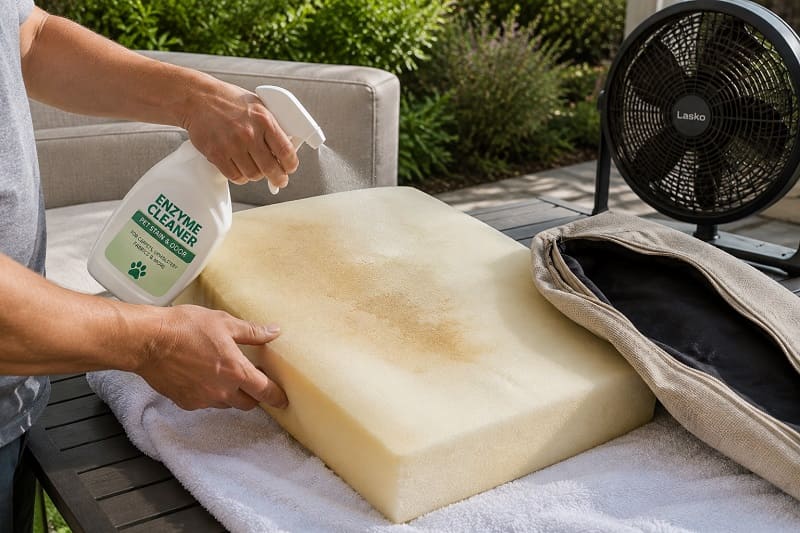
If the cushion feels heavy, the smell returns after cleaning, or the accident was large, the urine is in the foam.
If the cover unzips:
- Remove the cover and wash it if the label allows, adding one cup of white vinegar to the cycle.
- Take the foam outside or into a bath.
- Rinse it slowly with cool water, pressing gently. Do not wring or twist, because that tears the foam structure.
- Soak it with enzyme cleaner and leave for 20 minutes.
- Press the liquid out with your palms, then press it between two towels.
- Stand it on edge with a fan blowing across it for 24 to 48 hours.
- Make absolutely sure it is bone dry before putting the cover back on. Squeeze the middle and check your hand.
If the cover does not unzip: Work the enzyme cleaner in slowly with a spray bottle, working from the outside of the stain toward the middle. Give it time and repeat over several days rather than soaking it once.
When foam should be replaced: If you have cleaned twice, dried fully, and the smell still returns, or if the accidents happened repeatedly in the same spot over months, the foam is the problem. Replacing a cushion insert is far cheaper than a new sofa and takes an upholsterer under an hour.
Which Cleaner Actually Works
| Cleaner | What it does | Best for | Limits |
| Enzyme cleaner | Digests uric acid crystals | Dried stains, cat urine, deep foam odour | Needs to stay wet, takes patience |
| White vinegar | Neutralizes ammonia, kills bacteria | Fresh accidents, light odour | Does not remove crystals |
| Baking soda | Absorbs moisture and odour | Finishing step after any method | Surface only |
| Hydrogen peroxide | Breaks down stains, disinfects | Visible marks on light colored fabric | Bleaches. Always patch test |
| Borax | Draws out deep moisture and odour | Foam cushions after vinegar | Keep away from pets and children |
| Dish soap | Lifts residue | Mixed in small amounts | Too much leaves sticky film |
If you buy only one product, make it an enzyme cleaner. Nothing else removes the actual cause.
Mistakes That Lock the Smell In
These are the errors we see most often on service calls.
- Using a steam cleaner or hot water. Heat bonds uric acid crystals to fabric permanently. This is the single biggest mistake. Only steam after the enzyme has done its job, if at all.
- Using an ammonia based cleaner. Urine already contains ammonia. Adding more makes the smell worse and tells your pet this is the toilet spot.
- Using bleach. It damages fibers, strips color, and creates dangerous fumes when it meets urine.
- Rubbing instead of blotting. Rubbing spreads the stain and drives it into the padding.
- Spraying air freshener or perfume. It sits on top of the smell for an hour, then you have two smells instead of one.
- Not using enough cleaner. The cleaner must reach as deep as the urine did. A light mist on a soaked cushion does nothing.
- Putting cushions back damp. This causes mould and a musty smell that is harder to fix than the urine.
- Cleaning without gloves and ventilation. Old concentrated urine gives off ammonia fumes that irritate eyes and lungs. Open a window.
How to Know the Smell Is Really Gone
Do this check three days after cleaning, once everything is fully dry.
- The warm test. Press your palm on the spot for 30 seconds, then smell it. Body heat releases trapped odour, and this mimics what happens when someone sits down.
- The blacklight test. In a dark room, run the torch over the area. Old residue still glows.
- The humid day test. Urine odour spikes in damp weather. If the sofa passes on a rainy day, you are clear.
- The fresh nose test. Leave the room for 20 minutes, then walk back in. You go nose blind to smells you sit with all day.
When to Call a Professional
Bring in a specialist when:
- The smell returns after two proper enzyme treatments
- The sofa has an X care code, or is velvet, suede, silk, or unfinished leather
- Accidents happened repeatedly in the same spot over a long period
- The sofa is antique, high value, or has a delicate dye
- You can see or smell mould in the padding
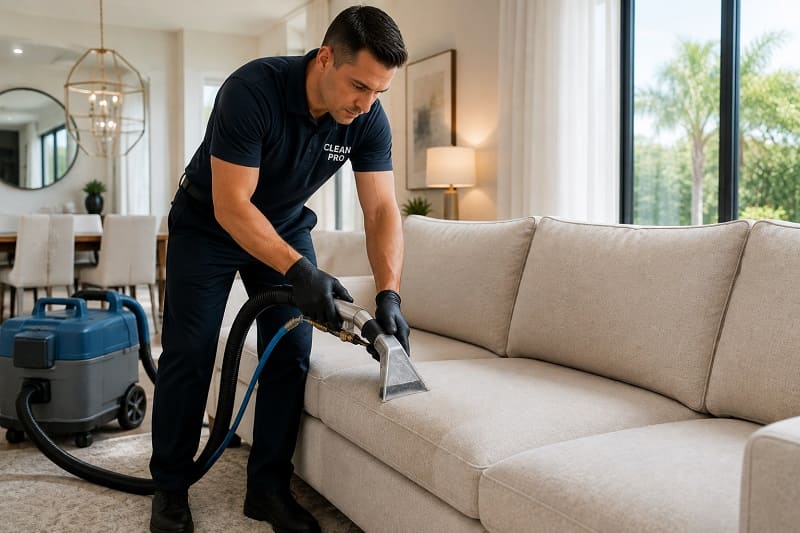
Professional upholstery cleaners use tools you cannot buy easily. Moisture meters find the true edge of the contamination. Injection tools push treatment straight into the foam instead of just onto the surface. Extraction machines pull the dissolved crystals back out. Most also apply a sanitiser afterwards.
Cost varies by region and sofa size, but urine treatment usually costs a small fraction of replacing a sofa. Ask whether the quote includes odour treatment or only surface cleaning, and ask if there is a guarantee.
How to Stop It Happening Again
- Use a washable waterproof throw on the seat that gets used most. This is the single most effective step.
- Choose the right fabric next time. Tight weave polyester and performance fabrics resist liquid far better than cotton, linen, or velvet.
- Apply a fabric protector. A quality upholstery protector gives you extra minutes to blot before liquid soaks in.
- Keep litter boxes clean. One box per cat plus one spare, scooped daily.
- Stick to a toilet routine for dogs, especially puppies and older dogs.
- Rule out medical causes. Repeat accidents in a trained pet or a previously dry child usually have a health reason behind them.
- Clean fully the first time. Any leftover smell invites a repeat visit from the same pet.
- Vacuum weekly with the upholstery tool so dirt and hair do not trap odour.
Final Words
Getting pee smell out of a sofa comes down to three things: act quickly, match the method to your fabric, and use an enzyme cleaner rather than just covering the smell. Vinegar and baking soda are great helpers, but only enzymes break down the uric acid crystals that cause the odour to return. Take your time with drying, check your work after a few days, and treat the foam rather than just the surface.
If you have tried these steps and the smell is still there, or your sofa is leather, velvet, or too precious to risk, professional help is worth it. Sofa Upholstery is here when you need that extra hand, from deep odour treatment to cushion foam replacement and full reupholstery.
Frequently Asked Questions
Does vinegar remove urine smell from a couch? Yes for fresh accidents. Vinegar neutralizes the ammonia smell and kills bacteria. It does not dissolve uric acid crystals, so dried stains and cat urine need an enzyme cleaner as well.
How long should baking soda sit on a couch? At least 8 hours and ideally overnight. A quick 30 minutes helps a little, but the longer it sits the more moisture and odour it pulls out.
Can I steam clean urine out of a sofa? Not before treating it with an enzyme cleaner. Heat permanently bonds uric acid crystals to fibers and locks the smell in. Use cool water and enzymes instead.
Why does the pee smell come back after cleaning? The crystals were never removed, only covered. They reactivate with warmth or humidity. Treat the area again with an enzyme cleaner and make sure the cleaner reaches as deep as the urine did.
How long does urine smell last if you do nothing? Months, and sometimes years. The liquid dries but the crystals stay in the fibers and foam and release odour every time the air gets damp.
Can I use hydrogen peroxide on my sofa? Only on light colored, water safe fabric, and only after a patch test in a hidden spot. It bleaches. Never use it on leather, wool, microfiber, or dark fabric.
What if the smell is in the wooden frame? Wipe the frame with a vinegar and water mix, let it dry, then apply enzyme cleaner. Bare wood may need a stain blocking sealer afterwards.
Is it safe to sit on the sofa while it dries? Wait until it is fully dry, usually 24 to 48 hours. Sitting on damp foam pushes moisture around and slows drying.