Your outdoor furniture cost real money, so it deserves better than a quick hose-down twice a year.. Learning how to clean outdoor furniture properly is the difference between a set that looks tired after two summers and one that still looks showroom-fresh after ten. The problem? Most advice online treats every material the same, and the wrong cleaner can strip teak oil, scratch powder-coated aluminum, or set a stain permanently into acrylic fabric.
This guide fixes that. Below you’ll find one universal cleaning method, then exact instructions for seven materials, a fabric stain chart, a mold-removal protocol, and care tips for hot, dusty, and coastal climates. Fifteen minutes of reading, years of extra furniture life.
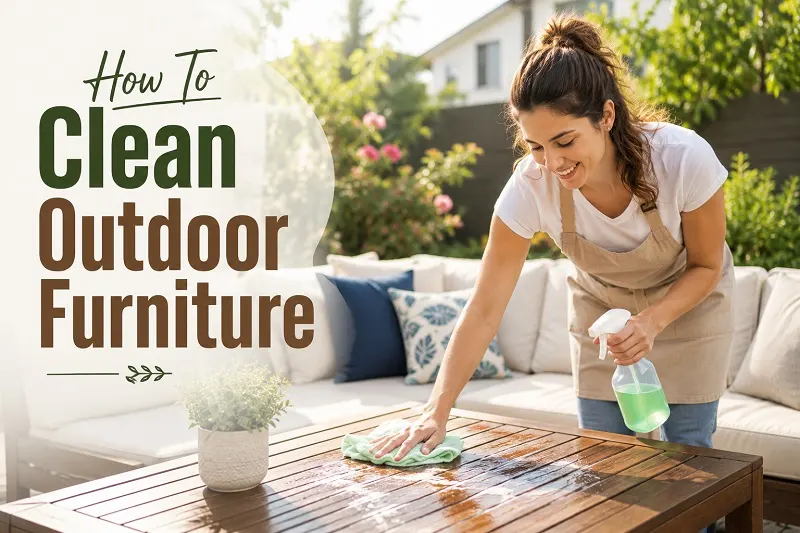
How do you clean outdoor furniture? Mix 1 tablespoon of mild dish soap per liter of warm water. Brush off loose dirt first, then wash the furniture with a soft-bristle brush or sponge, working top to bottom. Rinse thoroughly with a hose and let everything air-dry completely before replacing cushions. Avoid bleach, abrasives, and pressure washers on most materials.
TL;DR: Key Takeaways
- Soap and water wins. Mild dish soap in warm water safely cleans nearly every outdoor furniture material. Save specialty cleaners for specific problems like rust, mildew, or greyed teak.
- Dry-brush before you wet anything. Wetting dust and pollen first turns it into an abrasive paste that grinds into finishes and fabric.
- Match the method to the material. Teak, powder-coated aluminum, wicker, HDPE plastic, and outdoor fabric each have one thing you must never do to them. They’re all listed below.
- Skip the pressure washer on furniture. It’s fine for a hardwood deck at a distance, but it splinters wood furniture, strips paint, and frays wicker.
- Drying matters as much as washing. Trapped moisture, not dirt, causes most mold, mildew, and rust. Always dry frames and stand cushions on their sides to drain.
- Clean quarterly, wipe monthly. In dusty, humid, or coastal areas, rinse frames weekly to stop sand and salt from doing permanent damage.
Why Cleaning Outdoor Furniture Matters More Than You Think
Regular outdoor furniture cleaning isn’t cosmetic; it directly extends the working life of the furniture, often by years. UV radiation, moisture, and airborne grit are the three forces that destroy outdoor pieces, and a layer of dirt accelerates all three: it holds moisture against frames, traps mold spores in fabric, and acts like fine sandpaper every time someone sits down.
The economics are simple. A quality outdoor sofa set commonly runs $1,500–$4,000 (roughly AED 5,500–15,000), while a year’s worth of cleaning supplies costs under $20. (Flag: verify current price ranges for your market before publishing.) Industry care guides generally agree that consistently maintained teak and powder-coated aluminum can serve 15–25 years, while neglected pieces of the same quality may need replacing in 3–5. (Flag: verify lifespan figures with a manufacturer source such as a teak or Sunbrella care guide.)
There’s also a health angle. Outdoor cushions that stay damp become a habitat for mold and mildew, which trigger allergies and asthma in sensitive people. Clean, dry furniture is simply healthier to live with.
What You’ll Need Before You Start
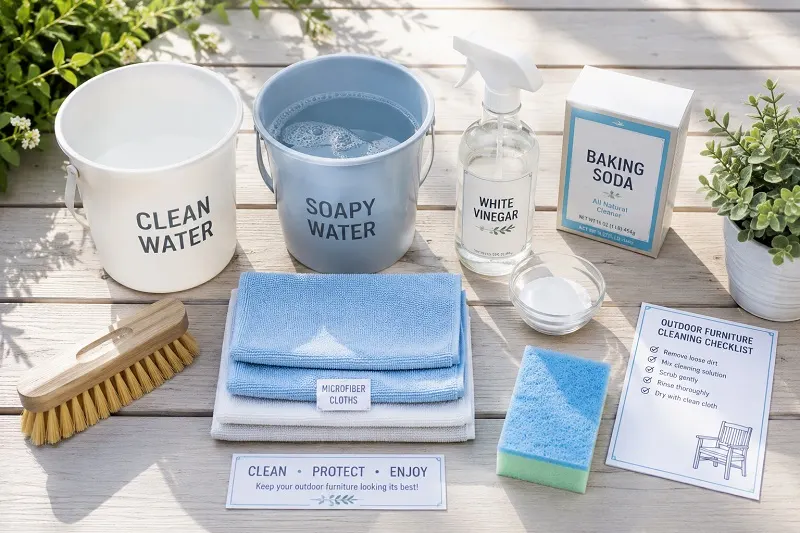
A proper patio furniture care kit costs little and lasts for years. Gather these before you begin:
- Two buckets (one for cleaning solution, one for rinse water)
- Mild dish soap (liquid, not degreaser formulas)
- Soft-bristle brush and an old toothbrush for crevices
- Non-abrasive sponge and microfiber cloths
- Garden hose with a gentle spray setting
- White vinegar and baking soda for stains and mildew
- Vacuum with a brush attachment (ideal for wicker and fabric)
An insider trick from car detailing that no furniture guide mentions: use the two-bucket method. Dip your brush in the soap bucket, scrub, then rinse the brush in the plain-water bucket before re-dipping. This stops you dragging grit back across the furniture, which is exactly how fine scratches appear on glass tabletops and glossy aluminum frames.
How Do I Clean Outdoor Furniture? The Universal 6-Step Method
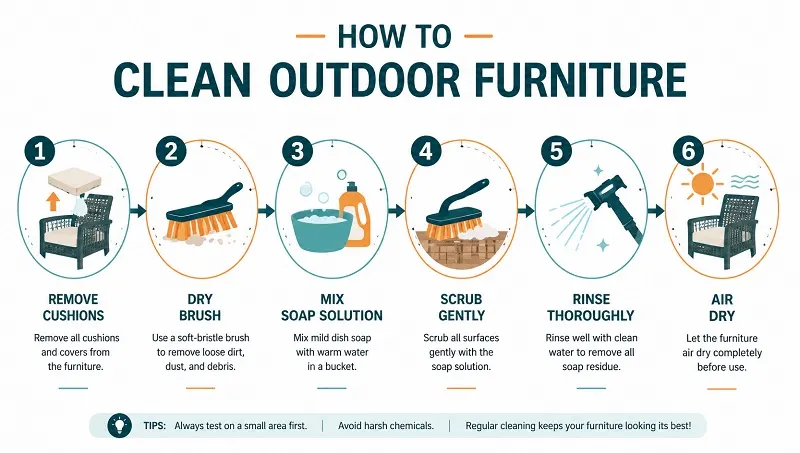
Almost every piece of outdoor furniture can be cleaned safely with the same six steps; only the tools and cleaner strength change by material.
- Strip it down. Remove cushions, pillows, and covers. Check care labels; many cushion covers are machine-washable, which saves serious scrubbing time.
- Dry-brush everything. Sweep off leaves, cobwebs, sand, and pollen with a dry brush or vacuum. Never skip this. Wet dust smears into a muddy film that’s far harder to remove than dry dust.
- Mix your solution. One tablespoon of mild dish soap per liter of warm water (about 1/4 cup per gallon). That’s genuinely all most furniture needs.
- Wash top to bottom. Work in sections with a soft brush or sponge so dirty runoff flows over areas you haven’t cleaned yet, not areas you’ve finished.
- Rinse thoroughly. Leftover soap residue attracts new dirt and can leave streaks or discoloration as it bakes in the sun. Rinse until the water runs clear.
- Dry completely. Towel off frames, open drainage holes, and let everything air-dry in a breezy spot before cushions go back on.
For routine cleaning of patio furniture, this whole process takes 30–45 minutes for a standard dining set. Now let’s handle what makes each material different.
How to Clean Outdoor Furniture by Material
Different materials fail in different ways: wood rots, metal rusts, wicker frays, and plastic goes chalky. Here’s the best way to clean patio furniture of every common type, including the one mistake to avoid for each.
How to Clean Teak and Wood Outdoor Furniture
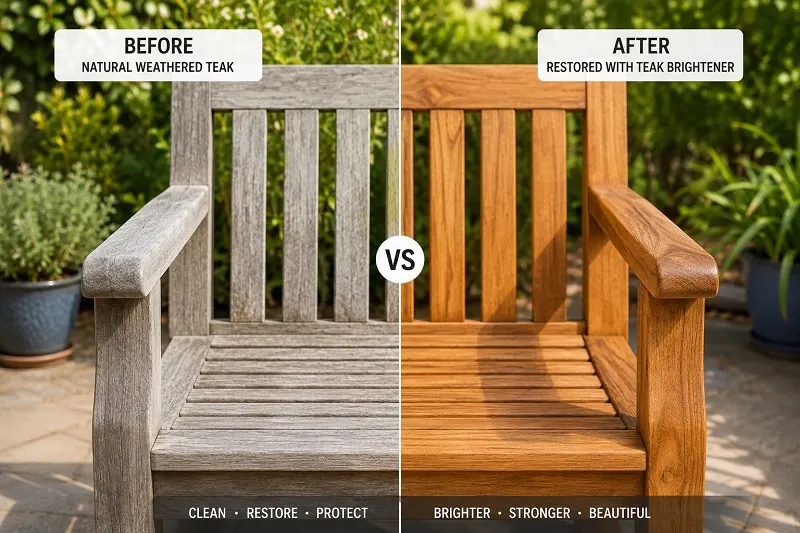
Wood outdoor furniture should only ever meet mild soap, water, and a soft brush; harsh chemicals and pressure washers permanently damage the grain. Scrub gently along the grain, rinse, and let the piece dry fully in open air.
Two teak-specific points people get wrong:
- Silvering is natural, not damage. Untreated teak fades from honey-gold to silver-grey as surface oils oxidize. If you like the grey, just keep it clean. If you want the gold back, use a dedicated two-part teak cleaner and brightener, then apply teak protector (not varnish, which peels outdoors).
- Never oil teak that lives outside. Teak oil outdoors feeds mildew and creates blotchy black spotting. Manufacturers like Barlow Tyrie and Kingsley Bate specifically advise against it. (Flag: verify against the manufacturer care page you plan to link.)
For softwoods like acacia or eucalyptus, add an annual coat of exterior wood sealant after cleaning. It’s a 20-minute job that prevents the cracking and warping these woods are prone to.
How to Clean Metal Outdoor Furniture
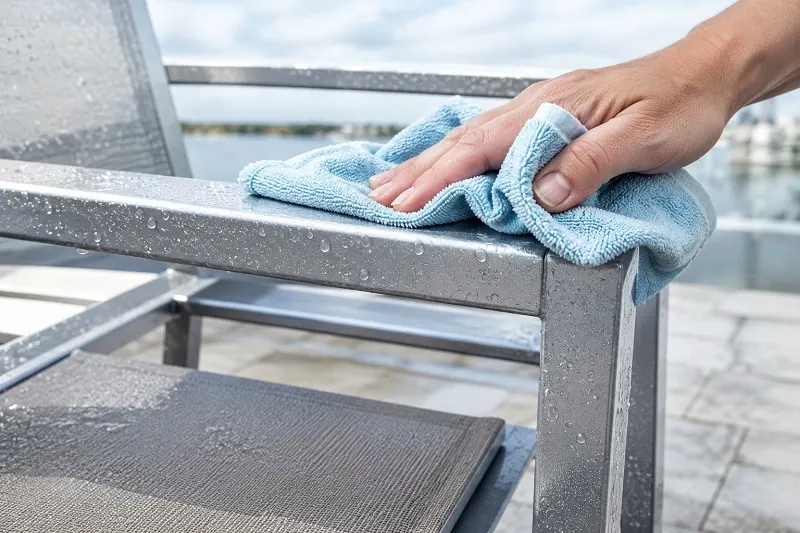
The safest way to clean metal outdoor furniture, whether aluminum, wrought iron, or steel, is soapy water applied with a cloth or sponge, never a wire brush or abrasive pad. Metal furniture rarely fails from dirt; it fails from scratched coatings that let moisture reach bare metal.
Powder-coated aluminum (most modern sets): wash with soapy water, rinse, and dry. For stubborn spots, a 50/50 vinegar-water mix works well. Twice a year, apply a coat of automotive spray wax; it adds a sacrificial UV and moisture barrier the same way it protects car paint. Tip the frames after cleaning and pull the foot glides to drain any water trapped inside the tubes; trapped water corrodes frames from the inside and voids most warranties.
Wrought iron: inspect for rust and paint chips before washing. Touch up chips with rust-inhibiting primer and matching paint the moment you spot them, because a chip the size of a fingernail becomes a rust bloom the size of your palm within one humid season. Wax twice a year, and quarterly if you live near the sea.
Stainless steel: wipe with soapy water along the grain, then dry immediately to prevent water spots. Near coastlines, even 316-grade stainless can develop “tea staining” (light surface rust); remove it with a dedicated stainless cleaner, never steel wool.
How to Clean Wicker and Rattan Furniture
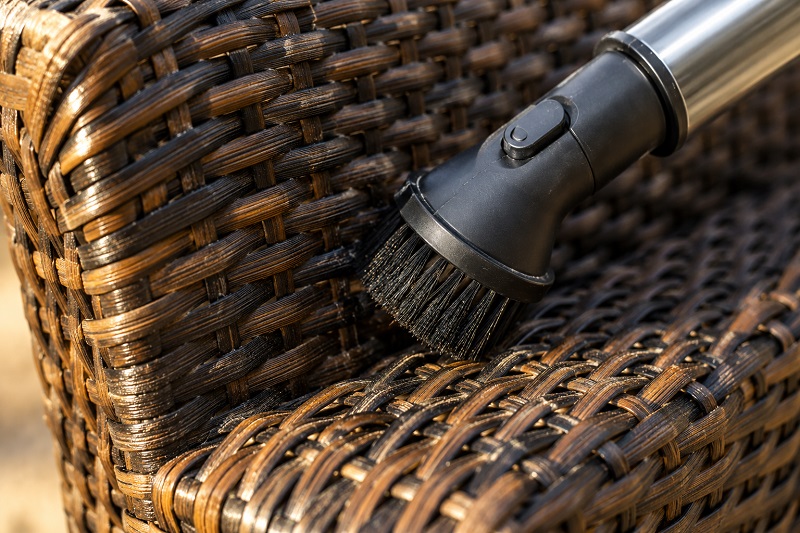
Wicker’s woven texture traps dust deep in its grooves, so effective cleaning starts with a vacuum, not a wet sponge. Use the brush attachment, then wipe with a well-wrung cloth dipped in mild soapy water. The critical rule: keep wicker damp, never soaked.
- Natural rattan absorbs water, which makes the fibers swell, sag, and eventually crack. Wipe, don’t wash, and dry it quickly in a ventilated spot.
- Synthetic (resin) wicker tolerates a gentle hose rinse, but still avoid pressure washers, which fray and unravel the weave at the edges.
- For gunk lodged between weaves, an old toothbrush dipped in your cleaning solution reaches where sponges can’t.
How to Clean Plastic, Resin, and HDPE Furniture
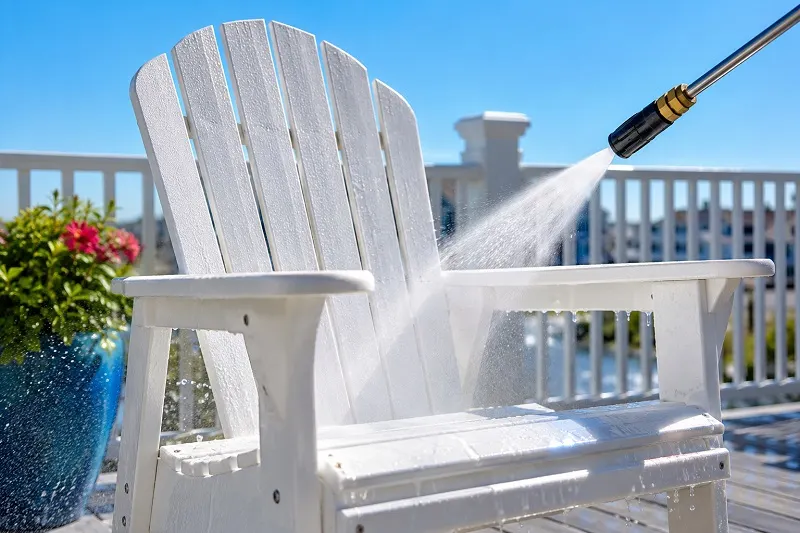
Plastic outdoor furniture is the most forgiving material to clean, but the least forgiving of the wrong chemical: bleach and abrasive powders permanently dull or discolor colored resin. Wash with soapy water, rinse, done.
For chalky oxidation or ground-in grime on white plastic only, a diluted bleach solution (about 1/3 cup bleach to 2/3 cup water) restores brightness. Let it sit 10 minutes, scrub with a soft brush, and rinse very thoroughly. On colored plastic, use a baking-soda paste instead; it lifts stains without bleaching pigment.
Premium HDPE poly lumber (Polywood-style furniture) handles stronger cleaning, and manufacturers approve pressure washing at up to roughly 1,500 PSI from 20–30 cm away. It’s the only furniture category where a pressure washer is routinely safe. (Flag: verify PSI guidance against the specific brand you stock or link.)
How to Clean Outdoor Furniture Fabric and Cushions
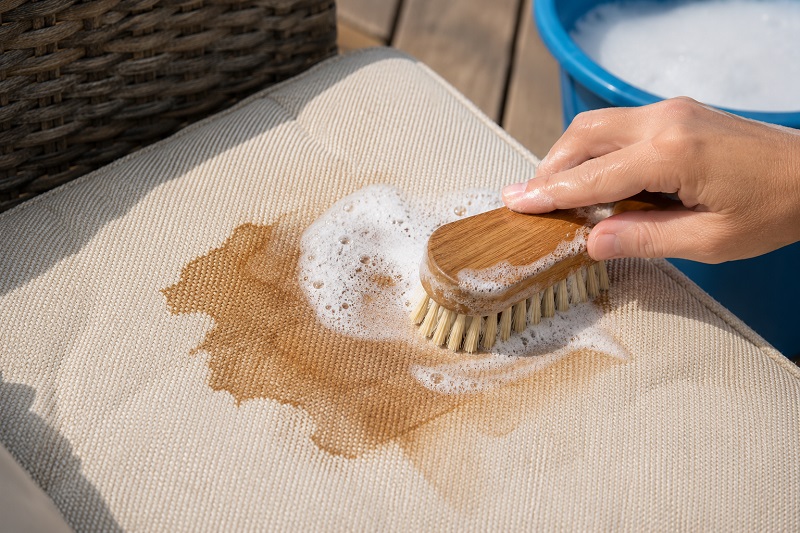
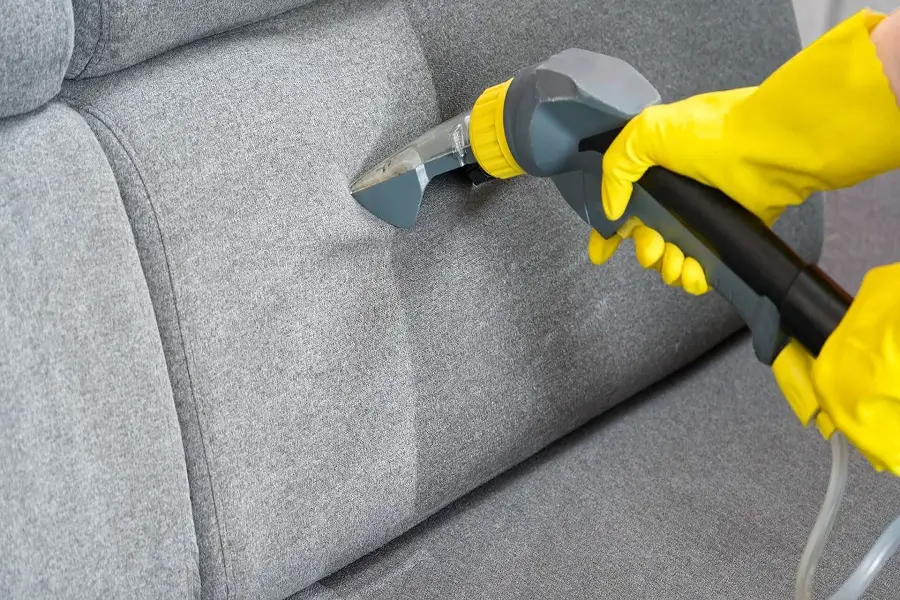
Most outdoor furniture fabric cleans up with the same mild soap solution as frames, but the technique differs: dip your brush into the solution rather than pouring liquid onto the cushion, so the foam core stays dry. Scrub gently in small circles, rinse until the water runs clear, then stand cushions on their sides to dry so water drains out the bottom seam instead of pooling in the fill.
Match the treatment to the stain:
| Stain type | Treatment |
|---|---|
| Food, coffee, cola, bird droppings | 60 ml dish soap per 4 liters of water; scrub and rinse |
| Beer, urine, vomit | Add 80 ml white vinegar to the soap solution above |
| Oil, grease, sunscreen, tree sap | Cover with cornstarch for 15 minutes to absorb, scrape off, then wash with soap solution |
| Ink or charcoal marks | Vacuum loose residue first, then soap solution |
| Mold and mildew | See the dedicated section below |
Solution-dyed acrylic fabrics (Sunbrella and similar) are the exception to the no-bleach rule: their color runs through the fiber, so they tolerate a diluted bleach cleaning for mildew without fading. Always check the manufacturer’s care tag first.
One prevention habit worth building: sunscreen is one of the most common and most stubborn cushion stains in warm climates. Keep a towel on loungers during peak swim season and you’ll halve your fabric cleaning workload.
Outdoor Furniture Cleaning Cheat Sheet
| Material | Best cleaner | Never use | Deep-clean frequency |
|---|---|---|---|
| Teak / hardwood | Mild soap + soft brush | Pressure washer, teak oil outdoors | 2–3x per year |
| Powder-coated aluminum | Mild soap + cloth | Abrasives, wire brushes | Quarterly; wax 2x/year |
| Wrought iron | Mild soap + cloth | Pressure washer, harsh chemicals | Quarterly; wax 2x/year |
| Natural wicker/rattan | Vacuum + damp cloth | Soaking, pressure washer | Monthly light, 2x/year deep |
| Synthetic wicker | Mild soap + hose rinse | Pressure washer | Quarterly |
| Plastic / resin | Mild soap; bleach mix on white only | Bleach on colors, abrasive powder | Quarterly |
| Outdoor fabric | Soap solution per stain chart | Pouring cleaner into foam, hot dryer | Monthly spot, seasonal deep |
How Do You Remove Mold and Mildew From Outdoor Furniture?
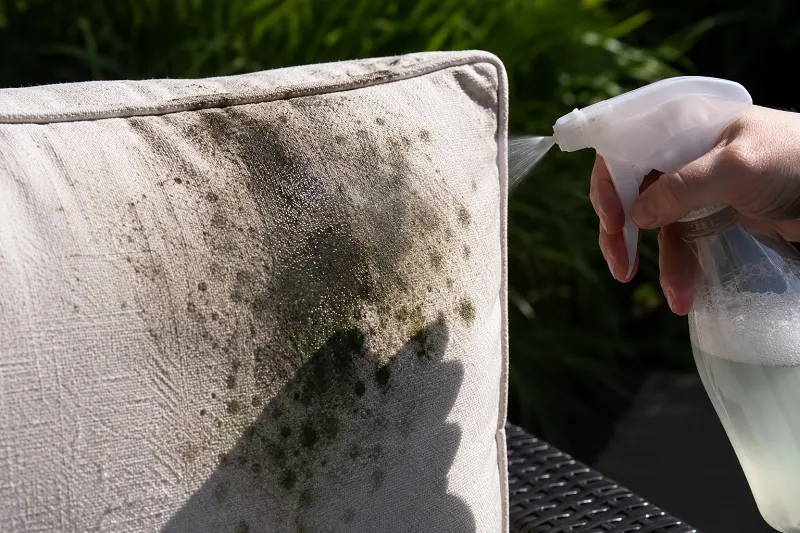
Mold and mildew need to be killed, not just washed off, or they return within weeks. Here’s the protocol that works on fabric and most hard surfaces:
- Move the piece into direct sunlight; UV is a free mold killer.
- Dry-brush the visible growth off with a stiff brush (wear a dust mask).
- Mix 60 ml dish soap and 1 cup of bleach per 4 liters of water for bleach-safe fabric and white plastic, or a 50/50 white vinegar and water spray for wood, colored fabric, and painted metal.
- Saturate the affected area and let it sit 15 minutes in the sun.
- Scrub, rinse thoroughly, and dry completely before use or storage.
Prevention beats treatment: mildew needs sustained dampness, so the fixes are airflow and drainage. Store cushions in a ventilated deck box rather than sealed plastic bags, and never cover furniture while it’s still wet; a cover over damp furniture is a mold greenhouse.
Deck Cleaning: Don’t Put Clean Furniture on a Dirty Floor
A freshly washed patio set on a grimy deck gets dirty again from the ground up, so clean the surface underneath at the same time. Clear the deck, sweep it, then wash with a deck cleaner or soapy water and a stiff broom.
Pressure washing is appropriate here, with limits: use a wide fan nozzle, keep it 30–60 cm from timber, and always work along the grain. Getting closer than about 15 cm gouges soft wood permanently. On tile, stone, or composite decking common around pools, a standard fan tip at moderate pressure is safe and fast. Rinse the deck before moving furniture back so alkaline cleaner residue doesn’t transfer to your frame feet.
Caring for Outdoor Furniture in Hot, Dusty, and Coastal Climates

Standard care advice is written for mild climates; hot, dusty, and coastal regions like the UAE need a different playbook. If your furniture faces 45°C summers, fine desert dust, humidity, and salt-laden sea air, adjust the routine in four ways:
- Rinse before you wipe. After a dusty or windy day, hose frames down before touching them with a cloth. Wiping dry desert dust across a surface scratches glass, acrylic, and gloss finishes. This is the single most common cleaning mistake in the Gulf region.
- Clean early morning or after sunset. On a 40°C+ afternoon, soap solution dries on the surface in under a minute, leaving streaks and residue before you can rinse. Cooler hours give you working time, and you won’t burn your hands on metal frames.
- Treat salt air as a schedule changer. Within roughly a kilometer of the coast (or around saltwater pools), give metal frames a plain-water rinse weekly and wax them quarterly instead of twice a year. Salt crystals are hygroscopic; they hold moisture against metal and accelerate corrosion dramatically.
- Think of summer as your “winter.” In the Gulf, furniture takes its worst beating from June to September sun, not from cold. Use breathable covers or move cushions indoors during peak summer the way northern owners store furniture for snow. UV, not frost, is your enemy.
These same rules apply anywhere with similar conditions, from coastal Australia to Arizona to southern Spain.
How to Care for Outdoor Furniture Year-Round
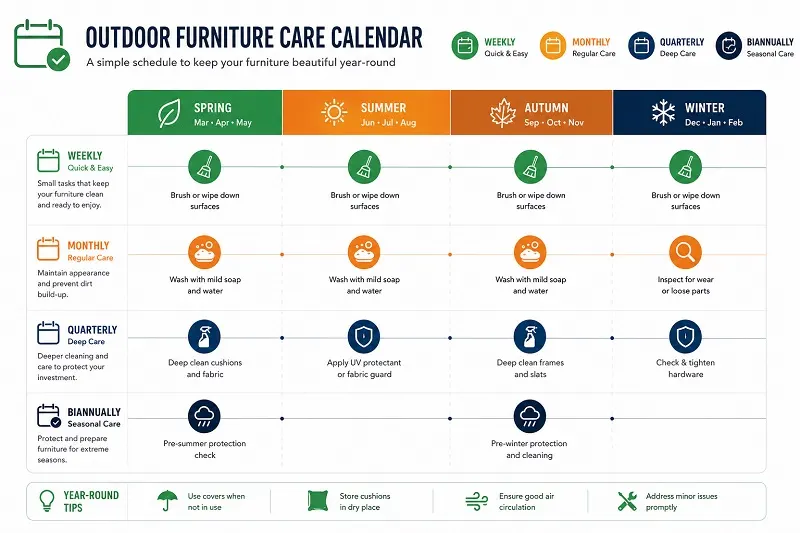
A five-minute monthly habit prevents 90% of the deep-cleaning work, because dirt that never builds up never needs scrubbing off. Here’s a simple outdoor furniture care schedule:
- Weekly (heavy-use season): shake out cushions, wipe tabletops, quick visual check for bird droppings and sap (remove these immediately; both etch finishes within days).
- Monthly: dry-brush frames, spot-clean fabric, rinse everything with the hose.
- Quarterly: full six-step wash, drain metal frames, inspect for rust or loose weave.
- Twice a year: wax metal, seal or treat wood, deep-clean cushions, wash covers.
- Before long storage or extreme season: deep clean, dry completely, then cover with breathable covers or store off the ground in a ventilated space.
Covers deserve one clarification: a good cover is waterproof from above but breathable overall. Wrapping furniture in plastic sheeting traps condensation and causes the exact mildew you’re trying to prevent.
Common Outdoor Furniture Cleaning Mistakes to Avoid
- Pressure-washing furniture. Safe for HDPE poly and decks at a distance; destructive to wood, wicker, paint, and fabric.
- Wetting dust before removing it. Creates abrasive mud. Dry-brush or rinse first.
- Using bleach as a default cleaner. It discolors colored plastic and fabric and corrodes some metal fittings. Reserve it for white plastic and bleach-rated acrylic fabric.
- Skipping the rinse. Dried soap residue attracts dirt and streaks in the sun.
- Covering or storing damp furniture. The number-one cause of mildew.
- Machine-drying cushion covers. Outdoor fabric coatings and zippers hate heat; always air-dry.
Key Takeaways
- Mild dish soap and warm water clean almost every outdoor furniture material safely; escalate to vinegar, bleach, or specialty products only for specific problems.
- Always dry-brush or rinse loose dust before wet cleaning, especially in dusty climates.
- Know your material’s one fatal weakness: soaking for wicker, pressure washers for wood, bleach for colored plastic, teak oil for outdoor teak, scratched coatings for metal.
- Complete drying prevents the two most expensive failures: mildew in fabric and rust in frames.
- A monthly five-minute wipe-down plus a quarterly deep clean will keep most sets looking new for a decade or more.
- Hot and coastal climates need earlier-day cleaning, weekly salt rinses, and summer sun protection.
Give Your Outdoor Space the Care It Deserves
Cleaning outdoor furniture isn’t a chore once you have a system; it’s 30 minutes a season that protects thousands of dirhams’ worth of investment and keeps your patio ready for guests at all times. Start this weekend with the universal six-step method, bookmark the material cheat sheet, and put the quarterly deep clean in your calendar.
The Bottom Line: Clean Smart, Not Hard
Cleaning outdoor furniture comes down to one simple system: dry-brush the dust off first, wash with mild dish soap and warm water, rinse until the water runs clear, and dry everything completely before cushions go back on. That single method safely handles teak, aluminum, wrought iron, wicker, plastic, and outdoor fabric. The real skill is knowing each material’s one fatal weakness, like pressure washers on wood, soaking on natural wicker, bleach on colored plastic, and teak oil on outdoor teak, and avoiding it.
Pair that with a light monthly wipe-down and a proper deep clean every quarter, and your furniture can easily last a decade or more instead of three or four summers. If you live somewhere hot, dusty, or coastal like the UAE, adjust the routine slightly: rinse before you wipe, clean in the cooler hours, give metal a weekly salt rinse, and treat the summer sun the way northern owners treat winter snow. A few minutes of consistent care protects thousands of dirhams’ worth of furniture and keeps your outdoor space guest-ready year-round.
FAQ: Cleaning and Caring for Outdoor Furniture
How often should you clean outdoor furniture? Deep-clean outdoor furniture at least every three months, with a light wipe-down monthly during heavy use. In dusty, humid, or coastal locations, rinse frames weekly. Always add a full clean before covering furniture for an off-season.
What is the best homemade cleaner for outdoor furniture? Mix one tablespoon of mild dish soap per liter of warm water. For tougher grime on metal or plastic, add white vinegar at a 50/50 ratio with water. These two solutions safely handle the vast majority of outdoor furniture cleaning jobs.
Can I use a pressure washer on patio furniture? Generally no. Pressure washers splinter wood, fray wicker, strip paint, and force water into cushions. The exception is HDPE poly furniture, which tolerates up to about 1,500 PSI from 20–30 cm away. For everything else, a garden hose and soft brush are safer.
How do you get mildew out of outdoor cushions? Brush off dry mildew first, then apply a solution of dish soap and bleach in water (for bleach-safe fabrics) or 50/50 vinegar and water for everything else. Let it sit 15 minutes in sunlight, scrub gently, rinse well, and dry cushions standing on their sides.
Should I cover my outdoor furniture? Yes, covering furniture between uses significantly slows UV fading and dirt buildup. Use fitted, breathable covers rather than plastic sheeting, and only cover furniture that is completely dry to avoid trapping moisture and growing mildew.
Why is my teak furniture turning grey? Grey teak is natural oxidation of surface oils, not rot or damage. Many owners prefer the silvered look. To restore the golden color, clean the wood, apply a teak brightener, and finish with a teak protector. Avoid teak oil outdoors, which encourages mildew.
How do I stop metal outdoor furniture from rusting? Keep it clean and dry, touch up paint chips immediately with rust-inhibiting primer, drain water from hollow frames after rain or washing, and apply automotive spray wax twice a year (quarterly near the coast). Rust prevention is far easier than rust removal.