Do not wait for your sofa to stink or show visible stains before you clean it. Cleaning fabric sofas yourself may sound complex, but it is surprisingly DIY friendly. With the right cleansers (put down your laundry detergents) and gentle methods, you can clean sofa upholstery without ruining it.
Discover the best way to clean upholstery & get professional-like results. Learn how to clean couch fabric routinely, deep-clean it, and handle emergency stains.
How To Clean Upholstered Furniture Like A Pro – Step-By-Step Guide
Using the wrong DIY-cleaning methods can lead to long-term problems & even health hazards. Find out the correct approaches to cleaning upholstered fabric sofas at home:
Know Your Sofa Fabric First
Before getting your hands dirty, see what the sofa has to say. Check the manufacturer’s label to find which cleaning methods your couch can or cannot handle. Below is the breakdown of the care symbols found on upholstered sofas:
| Care Label | Meaning |
|---|---|
| W | Can Be Washed With Water |
| S | Cannot Clean With Water-Free Methods |
| WS | Safe For Water & Dry Cleaning |
| X | Vacuum Only |
For silk, linen, wool, and velvet sofas, do not be careless with cleaning & maintain them with gentle methods. Polyester, performance fabric, and top-grain leather sofas are the easiest to clean at home.
What To Clean Fabric Sofas With
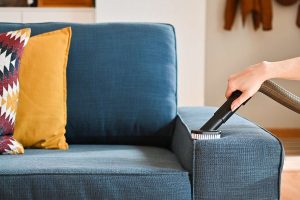
Check the list of tools and cleaning agents that work for most upholstered sofas.
Tools:
- Vacuum
- Soft Bristled Brush
- Damp Microfiber Cloth
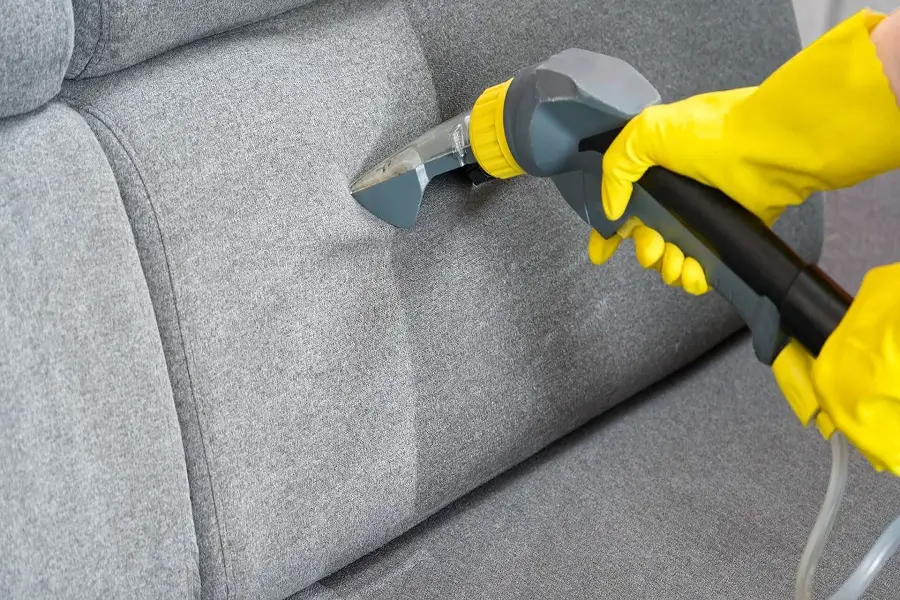
- Upholstery Cleaning Machine (Optional)
Cleaning Agents:
- Diluted Vinegar
- Backing Soda
- Mild Dish Soap & Water
Fabric Sofa Cleaning Tutorial For Routine Maintenance
Neglecting the routine maintenance can lead to the buildup of dust and allergens, making the sofas look tired and triggering sensitivities in your kids.
Frequency: Weekly or Monthly
Time Required: 10 to 20 Minutes
Vacuum Thoroughly: Take off all seat and back cushions of your couch (if they are removable). Get the vacuum, add its upholstery attachment, and hover it over the base, legs, and cushions.
Remove Pet Hair: Use a lint roller, damp dishwashing gloves, or Velcro rollers and gather the dog or cat fur.
Brush & Fluff: Brush the sofa nap (recommended for velvet sofas), smack the upholstery in all directions to fluff it up, and rotate the cushions.
How To Clean A Dirty Sofa At Home | Deep Cleaning Tips
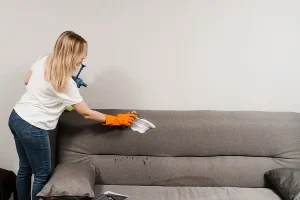
To prolong the lifespan of the sofa, deep-cleaning it once in a while is essential. Deep-cleaning is effective at revitalising worn & stained sofas and is cheaper than buying a new one.
Frequency: Every 6 To 12 Months
Time Required: 1–2 Hours For Cleaning & 14–20 Hours For Drying
Step 1: Prepare For Deep Cleaning
If possible, take out the couch cushions and detach their fabric covers. Vacuum underneath the sofa seat and the crevices, and dry-brush the cushion covers to remove dirt.
Step 2: Inspect & Pre-Treat Stains
Vacuuming and removing dirt will unveil the damage underneath. If you do find stains, analyse whether they are fresh or dry, identify their cause, and treat them (following the methods provided in this guide).
Step 3: Dry Clean Or Steam Clean
To dry clean sofa upholstery at home, spread baking soda liberally over the fabric. Let this powder sit for 12 hours to deodorise and clean your couch.
For steam cleaning the sofa, get a garment steamer with an upholstery attachment and hold it at least 5 centimetres away from the upholstery. Move it in small strokes over the sofa without missing any spots.
Step 4: Drying
After cleaning the sofa, place it in a corner with the maximum airflow or turn on the ceiling fan. Remove sofa cushions and cover them with towels to absorb water. Ideally, turn on the humidifier to extract moisture from the wet couch.
How To Get Stains Out Of Upholstered Sofas
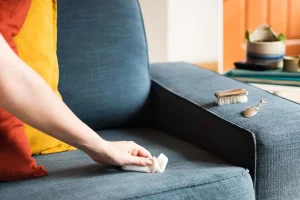
Doesn’t matter how much you care for your sofa; accidents happen. Here, we’ll teach you the right way to deal with common stains & blemishes on upholstered furniture.
Frequency: When Needed
Time Required: 10 To 30 Minutes
Food Stains
- In 1 cup of water (distilled, not tap), add 1 tablespoon of vinegar and 1 tablespoon of dishwashing liquid.
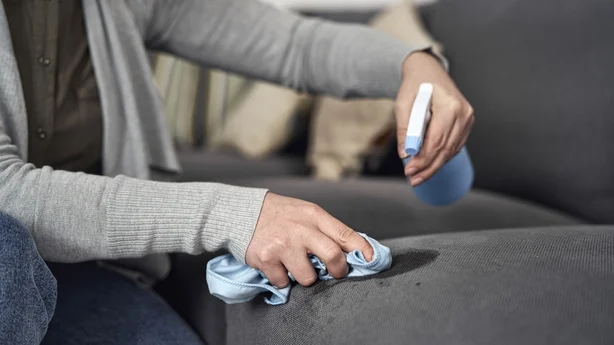
- Dip a clean cloth in this mixture and dab the tea or curry stains from the surrounding edges towards the centre.
- With a dry cloth, blot out the residue of the soapy solution.
Grease & Oil
- Sprinkle baking soda, cornstarch, or talcum powder on the affected part of the sofa.
- Let this powder sit for 20 minutes & vacuum it out.
- If the grease doesn’t lift, you can use a few drops of dish soap or a dry cleaning solvent (choose according to your couch’s label).
Pet Stains
- For urine stains, prepare a mixture of 1 cup of 3% hydrogen peroxide, 2 to 3 tablespoons of baking soda, and a couple of drops of liquid soap.
- Spray it on your upholstered sofa, leave it for an hour, and rinse it out. Only use this spot cleaning method for light-colored fabric sofas.
- You can remove dried-up pet smears by re-wetting the spot and applying an enzyme-based cleanser.
Ink Stains
- For pen or marker ink, dip a cotton pad or white cloth in isopropyl alcohol (hairspray also works) and blot gently to transfer the ink from the sofa to the cotton.
- To remove old ink marks, blot them out with a nail polish remover that does not contain acetone.
Makeup Stains
- Foundations are typically oil-based, and if spilt on the sofa, you can remove them with the dish soap blot method.
- To remove eyeliner marks from the sofa, micellar water works the best.
- To clean waxy lipstick marks, dab the upholstery with isopropyl alcohol.
Emergency Response | What To Do In First 5 Minutes
For successful stain removal from the sofa, immediate action is necessary. You should do these 3 three things:
- Take Cushion Covers Off: As soon as you notice the stain, remove the sofa cushions and unzip and take off their covers if possible.
- Blot the Spill: Get tissues or a clean, light-colored cloth to absorb as much of the spill as you can.
- Scrape Excess Solids: Scoop the solid particles with a butter knife or spoon.
How To Clean A Couch That Smells
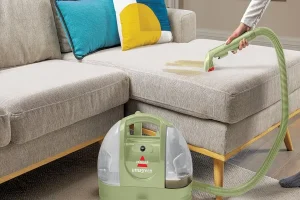
Does your couch have a musty or urine-like smell? If you moved recently, have untrained pets, or just haven’t cleaned the sofa in a long while, this foul odour is inevitable. Learn several effective methods to deodorise your fabric sofa and make it smell fresh again:
Frequency: Every 1 To 2 Months Or As Needed
Time Required: 15 To 30 Minutes Minimum To Overnight
Deodorising Sofa With Pantry Items
If you are wondering how to clean a sofa naturally, just go to your pantry and grab these ingredients:
- Water & Vinegar Spray: Mix water and vinegar in 1:1 parts, put it in a spray bottle, and lightly mist it (without soaking the sofa). This method is most effective at eliminating odour and is ideal for sofas with code W or SW.
- Baking Soda: Sprinkle a handful of baking soda onto your couch and leave it for half an hour to do its magic. This ingredient neutralises the general odour and is suitable for sofas with code X.
- Coffee Grounds: To mask pet smell or strong odours, add ground coffee beans to a bowl and place it on the sofa or next to it overnight.
- Lemon Water: Mix one lemon’s juice in 170 millilitres of hot water, dip a clean cloth in it, and wipe your couch. Avoid this on dark or bright colored, delicate, and leather sofa fabrics.
More Odour Removal Tips
Discover more effective sofa deodorising tricks to eliminate specific smells.
- Enzymatic Cleansers For Pet Odours
If your couch has pet-related smells, any attempt to mask them won’t work. You need to clean the sofa with an enzyme-based cleaner to break down the organic matter that is causing your sofa to stink. - Charcoal For Cigarette Smells
Fabric sofas absorb cigarettes and smoke like a sponge. To remove such odours, put activated charcoal in a bag or bowl and place it on the sofa overnight. - Fresh Air For New Sofa Smell
New couches direct from the factory often have that strong, chemical-like smell. The best solution is to air them out; leave them in a ventilated area for a couple of days.
Mistakes To Avoid
More important than learning how to clean sofa upholstery is knowing how not to.
- Over-Wetting The Couch
The leading mistake that damages the sofa rather than revitalising it is cleaning it with excess moisture. This can cause the sofa fabric to shrink, result in musty odours, or, in the worst-case scenarios, invite mould. - Rubbing Stains Aggressively
Scrubbing stains, instead of just blotting, quietly weakens the fabric, leading to more damage than good. This can result in pilling and micro-tears that quickly turn into big rips. - Harsh Cleaning Agents
Cleansers that contain bleach, ammonia, or similar harsh agents must not be used on sofa upholstery. Instead, you can use commercial upholstery cleaners or simply mild soaps. - Not Patch Testing
Even if the detergent seems compatible with your sofa, you must pre-test it on a small, inconspicuous area. You should analyse whether the colour faded or the fabric became weak after application. - Using Hot Water On Stains
Soaking sofa blemishes with warm water can cause the spill to spread. And if the stains are protein-based, like egg or sweat, hot water can make them set in permanently. - Not Properly Drying
If you sit on the sofa before it has properly dried, the water can become cloudy and leave brown marks. Moreover, the water can reach the frame, causing structural damage and wreaking havoc.
Signs To Call Professional Sofa Cleaners
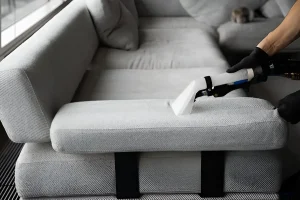
DIY cleaning is not very effective if the sofa’s damage is severe. Here are 4 symptoms your upholstered sofa needs professional help:
- The sofa has a persistent odour that at-home methods could not remove.
- The spills have set in deep and have nearly become permanent.
- If the upholstered sofa looks darker in colour and feels sticky.
- After you’ve recently moved or hosted a big event, professional couch cleaning is the most effective option.
Conclusion:
Clean sofas contribute to healthier homes. We revealed the experts’ secrets for cleaning upholstery. You explored tips & tricks about everyday maintenance and deep cleaning of delicate fabric sofas. Hopefully, these methods helped you care for your cherished sofa, restore its freshness, and extend its lifespan.